Wheel balancers
Wheel balancers
A balancer earns its money in seconds per wheel and in comebacks avoided. The range is built on two families — XP-560 and XP-570 — sharing an 8-second cycle, 200 rpm balancing speed and ±1 g precision, with the XP-513 as the family's heavy-duty car balancer.
Request a quotationBrowse the range- ±1 g precision
- 8-second cycle
- Rims 10–28 in
- Full parameter tables
Two families, one balancing standard
The XP-560 family (XP-560A, 560B, 560C, 560D and 560E) and the XP-570 family (XP-570A through XP-570E) balance wheels up to 1,000 mm diameter on rims from 8 or 10 inches up to 26 or 28 inches depending on model, at ±1 g precision. The XP-577, XP-585 and XP-590E sit in the same class. Differences between models are rim range, rim-width range and cabinet — the balancing standard does not change. Start from the job you are searching: the tyre balancer page (XP-560B), the tire balancer machine page (XP-570A and XP-570B), and the wheel balancer machine page (XP-513).
The XP-513 is the family's heavyweight: wheels to 70 kg, a 150 rpm balancing speed and a 10-second cycle, for workshops whose car work includes heavy SUV and light-truck wheels. And the XP-500 wheel lifter — 120 kg capacity, lifting to 400 mm — belongs in the same conversation as the XP-300 on the changer side: balancers are fed by hand, and the lifter is what feeds them safely.
Balancer pages in this family
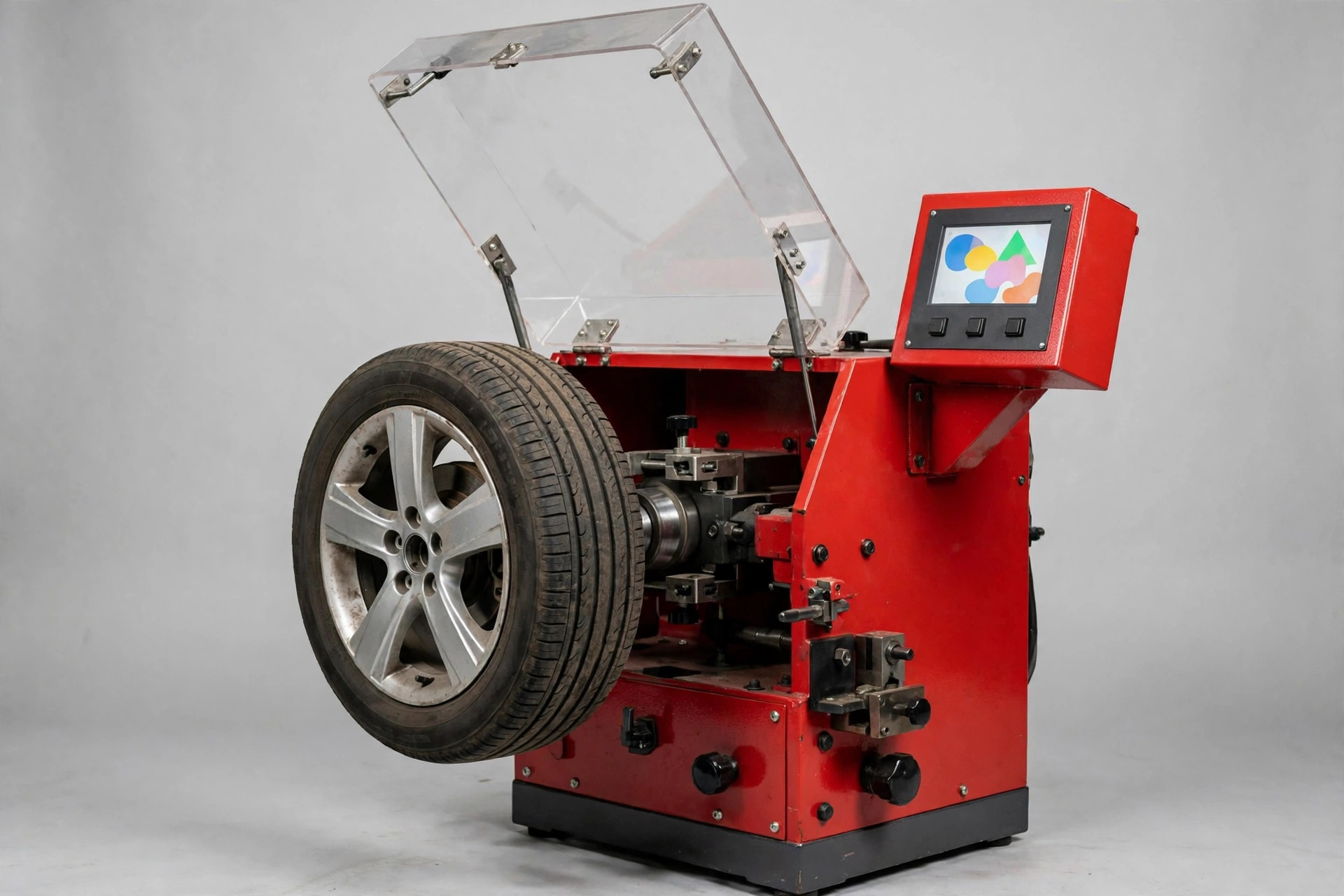
Generic illustration of a wheel balancer with its hood open and a car wheel mounted
Tyre balancer
The XP-560B: rims 10–26 in, ±1 g precision, 8-second cycle — the XP-560 family's reference model.
View the pageGeneric illustration of a wheel balancer with its hood open and a car wheel mounted
Tire balancer machine
The XP-570A and XP-570B: the wide-rim end of the car balancer range, widths to 20 inches.
View the pageGeneric illustration of a wheel balancer with its hood open and a car wheel mounted
Wheel balancer machine
The XP-513: wheels to 70 kg at 150 rpm — the heavy-duty end of the car balancer range.
View the pageThe balancer family at a glance
Model groups share the balancing standard; rim ranges decide between them. Take the full tables from the detail pages.
| Item | What it is / how it is handled |
|---|---|
| XP-560 family | XP-560A–E: rims 10–26 or 10–28 in, widths 1.5–18 in, wheels to 1,000 mm. |
| XP-570 family | XP-570A–E: the wider group, rim widths to 20 in on the A and B models. |
| XP-577 / 585 / 590E | Same-class models at 10–28 in rims for workshops standardising on one cabinet. |
| XP-513 | Wheels to 70 kg at 150 rpm — the heavy-duty end of the car balancer range. |
| XP-500 wheel lifter | 120 kg lifter raising wheels 400 mm to the balancer shaft. |
Checks before a balancer quote
- Wheels per day at peak — cycle time is the balancer's real specification.
- Largest rim diameter and wheel weight on your regular work.
- Alloy share of your work, which decides how much adhesive-weight work matters.
- Space for the hood swing and the wheel staging beside the machine.
- Whether the balancer pairs with a changer purchase for one delivered bay.
Questions buyers ask about wheel balancers
What separates the XP-560 and XP-570 families?
Rim-width range and cabinet detail more than balancing ability: both run ±1 g at an 8-second cycle. The XP-570A and B take 20-inch rim widths against the 560 family's 18, which matters if wide aftermarket wheels are your regular work.
What accuracy should I expect?
±1 g is the published precision across both families, and balancing results in the real world are decided by mounting repeatability — a true-centred wheel on a clean shaft — more than by the display's last digit.
Do I still need a bubble balancer?
For static balancing of narrow wheels and as an emergency backup it still has a place; the comparison page argues where it ends and the computer machine begins.
Send an inquiry
Compare both sides against your own work. Put your wheel sizes, vehicle weights and changeover counts side by side; ask for each side priced on its own written confirmation.
Request a quotation About the company