Comparison
Bubble vs computer wheel balancer
A bubble balancer levels a wheel on a spirit bubble and corrects static imbalance only; a computer balancer spins the wheel and corrects dynamic imbalance in two planes. This page compares the methods on physics first and habit second.
Request a quotationBrowse the range- Static vs dynamic explained
- Two-plane correction
- Where bubble still fits
- Family figures: ±1 g, 8 s
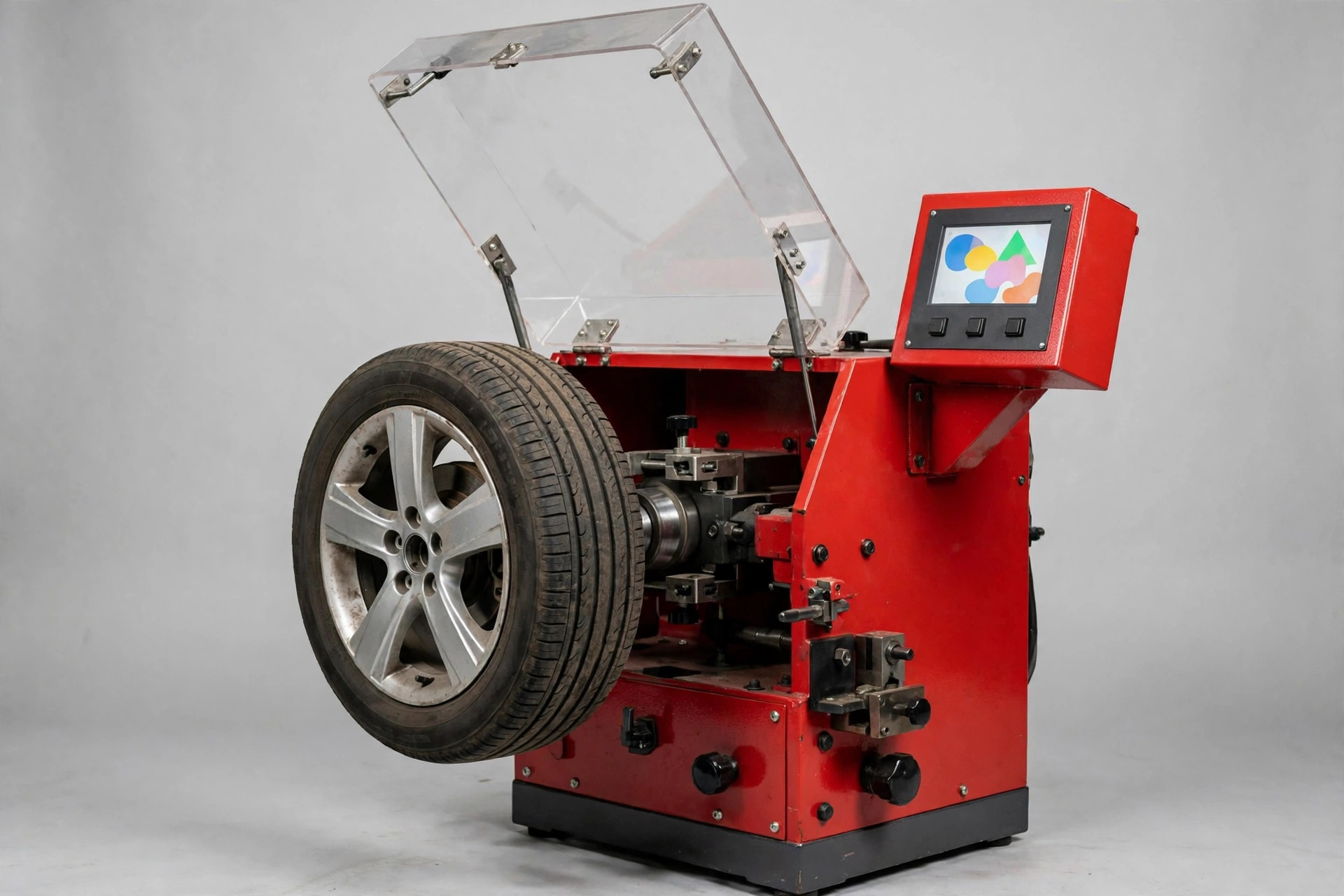
Static and dynamic are different faults
A wheel can be statically balanced — its heavy spot parks at the bottom — and still wobble at speed, because the imbalance is split across the wheel's two faces: heavy at the top on the inside, heavy at the bottom on the outside. That couple imbalance is invisible to any static method and unmistakable to the driver. Dynamic balancing measures and corrects in two planes, which is what a computer balancer's spin cycle does.
The bubble balancer is therefore not a worse computer balancer; it is an instrument for a smaller problem. The comparison below is about matching the instrument to the wheels you actually balance — and being honest that the modern car parc has mostly outgrown the smaller problem.
Bubble and computer balancing, compared
| Point | Bubble balancer (static) | Computer balancer (dynamic) |
|---|---|---|
| What it measures | Static imbalance only, by gravity and a spirit level | Static and couple imbalance, by spinning the wheel |
| Correction planes | One — weights placed by trial opposite the heavy spot | Two — inner and outer planes computed and indicated |
| Wheel widths served | Narrow wheels and tyres, where couple imbalance is small | All widths; essential as wheels grow wide |
| Precision language | Operator judgement; no gram figure | Published precision — ±1 g across this catalogue's car families |
| Speed | Slow and iterative on each wheel | An 8-second measured cycle on the XP-560 and XP-570 families |
| Cost | The cheapest balancing instrument that exists | A machine purchase, recovered in throughput and comebacks |
| Best fit | Narrow trailer, classic and emergency backup duty | Any workshop balancing modern car wheels for customers |
Where the bubble still earns its bench
Three honest cases remain. Narrow wheels — trailer, classic-car and some agricultural fitments — have couple imbalances small enough that static correction serves. Emergency backup: a bubble balancer has no electronics to fail during the computer machine's downtime. And teaching: nothing explains imbalance like watching a bubble settle. Workshops in those cases keep one, cheaply and without apology.
What the bubble cannot do is sign off a modern wide wheel. The comeback pattern is diagnostic: balanced on the bubble, vibrating at motorway speed, because the couple was never measured. If that sentence describes your returns tray, the method is the fault, not the operator.
What the computer machine actually buys
Two-plane correction, obviously — but the working purchase is repeatability and speed: an 8-second spin, a computed answer in grams and position, the same result in a trainee's hands as in a master's. The families in this catalogue hold ±1 g precision across the XP-560 and XP-570 ranges, with rim envelopes to 28 inches and widths to 20 inches on the wide models, and the XP-513 takes 70 kg wheels at the heavy end.
Buy it as a flow machine: changer, balancer, done, at a pace the tyre bay's day is planned around. The bubble's pace is a hobby pace, and there is nothing wrong with hobbies — they just should not be sold as services.
Questions buyers ask about bubble vs computer wheel balancer
Can a bubble balancer damage anything?
No — its risks are quality risks, not safety ones: an under-corrected wheel that vibrates and wears. The damage is to tyres and to the workshop's name.
Do wide wheels really need two planes?
Yes, physically: the wider the wheel, the larger the possible couple for the same static correction. Width is the variable that ended the bubble era, and wheels have only widened since.
Is a computer balancer hard to keep accurate?
It needs a true shaft, clean cones and periodic calibration checks with a known wheel — routine care, of the same order as the changer's. Mounting repeatability remains the operator's contribution to accuracy.
Send an inquiry
Compare both sides against your own work. Put your wheel sizes, vehicle weights and changeover counts side by side; ask for each side priced on its own written confirmation.
Request a quotation About the company