Guide
Oil extractor buying guide
An oil extractor pulls used oil out through the dipstick tube; a drainer catches it from below. Many workshop units combine both. This guide works through the choice, the sizing and the operating details — as buying guidance for a product type, independent of any one maker's range.
Request a quotationBrowse the range- Extractor vs drainer types
- Tank sizing method
- Vacuum generation options
- No model numbers — a method guide
Start here
Oil handling is unglamorous and constant: every service ends with litres of hot used oil that must leave the engine, cross the workshop and reach storage without touching the floor. The equipment choice looks small until it is wrong — a unit too small for the sump, a vacuum that fades, a bowl that splashes — and then it is wrong several times a day.
This guide covers the pneumatic oil extractor and drainer family as a product type. Work through it as a selection method: the checks below apply to any unit you are quoted, from any source, and they are ordered the way failures occur in real workshops.
Extractor, drainer, or both
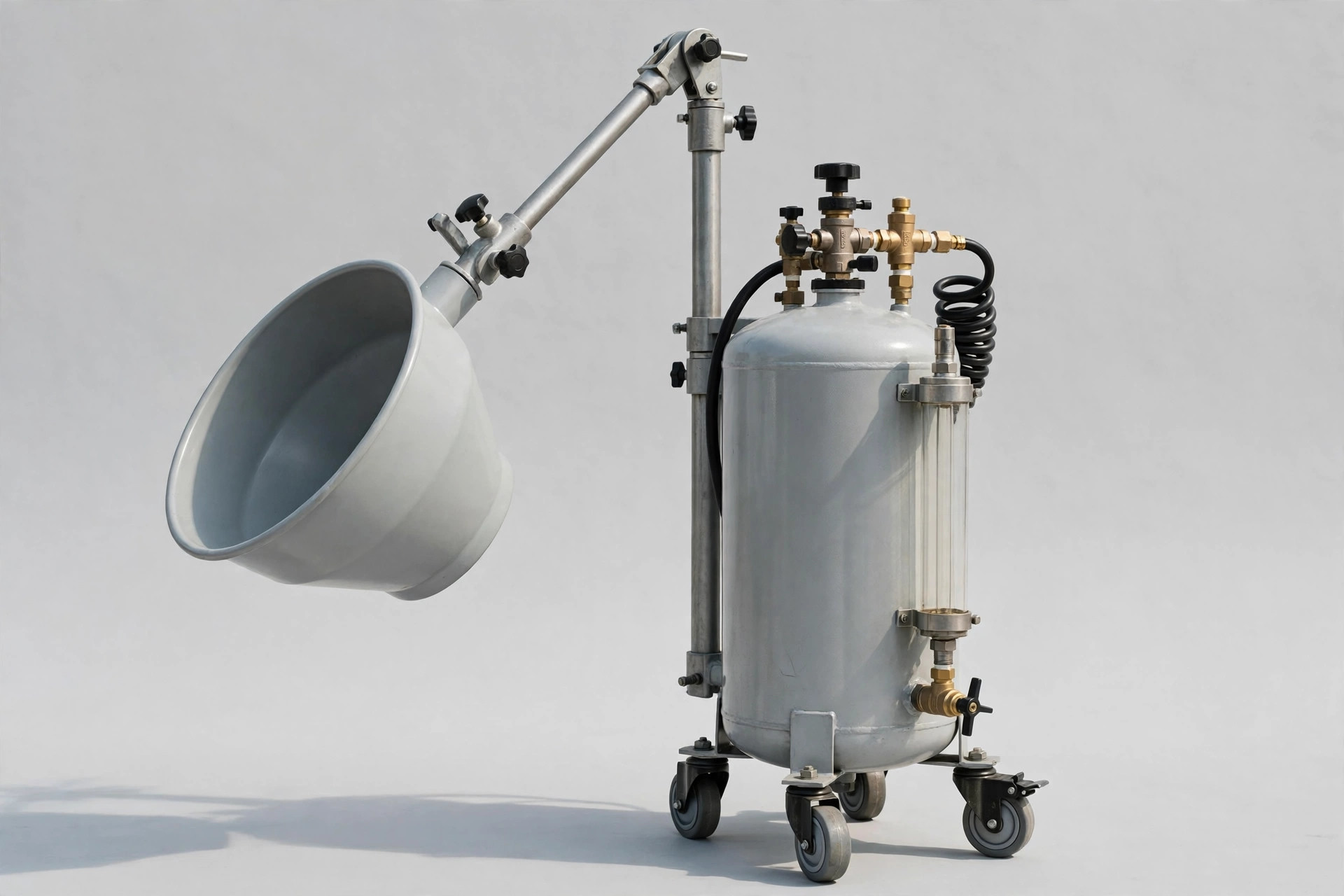
An extractor works from above: a probe down the dipstick tube, vacuum in the tank, and the sump empties without the car being lifted or the drain plug touched. It suits engines designed for top extraction and services where lift time is the bottleneck. A drainer works from below: a collection bowl on an adjustable stand under the raised car, gravity doing the work, the traditional route for plug-drained sumps.
Combined units do both, with the bowl draining into the same tank the vacuum extracts into. The honest question is your engine mix: fleets with extraction-designed engines justify the extractor-first unit; mixed workshops usually land on the combination, because the bowl earns its place the first day a plug-drained vehicle is on the lift.
Vacuum: how it is made and kept
Pneumatic extractors make their vacuum from the workshop's air line through a venturi, which means the compressor and the air quality enter the oil conversation: wet, dirty air makes weak vacuum and wears the generator. Ask how the unit generates vacuum, what air pressure it needs, and how the gauge shows the vacuum level — a gauge you can read at a glance is the difference between a diagnosed slow extraction and a blamed one.
Extraction probes are the other half: a set of probe diameters and a flexible probe for curved dipstick tubes decide which engines the unit can actually serve. Ask for the probe set's contents and the replacement route, because probes are consumables in everything but name.
Tank sizing and emptying
Size the tank to the work queue, not to the single sump: the largest sump you service, multiplied by the vehicles that will queue before someone empties the unit, with headroom. An undersized tank does not announce itself in specification comparisons; it announces itself mid-service, with a probe in the engine.
Emptying method matters as much: pressure discharge into your storage, a pump, or gravity through a valve each suit different storage arrangements. Match the unit's emptying to the tank or bowser you actually own, and check the discharge hose and fittings as carefully as the extraction side.
The inspection bowl and hot oil
Glass or transparent inspection bowls let the technician see the oil's condition and volume as it arrives — metal particles, coolant emulsion and fuel dilution announce themselves there first, which makes the bowl a diagnostic surface, not just a container. Ask what the bowl is made of and what temperature it is rated for; oil leaves a worked engine hot.
Wheels and handle geometry sound trivial until the unit crosses the workshop full: a tall full tank on small casters is a spill with a schedule. Push the candidate unit, loaded in imagination, across your floor's worst joint before you buy it.
Oil extractor types at a glance
| Item | What it is / how it is handled |
|---|---|
| Extractor (top) | Vacuum through the dipstick tube; no lift needed; engine mix must suit top extraction. |
| Drainer (bottom) | Bowl under the raised car; gravity; the traditional plug-drain route. |
| Combined unit | Both routes into one tank; the mixed-workshop default. |
| Vacuum source | Air-line venturi on pneumatic units; compressor quality is part of the spec. |
| Emptying | Pressure discharge, pump or gravity — match it to your storage. |
Questions buyers ask about oil extractor guide
Can every engine be extracted from above?
No. Some sumps and dipstick tubes do not give a probe a clean path to the oil, and some manufacturers intend plug draining. Your engine mix decides; a combined unit covers both intentions.
How fast should extraction be?
Fast enough that the probe is not the service's waiting point. Vacuum level and probe diameter govern it in practice — ask for both figures for the unit you are quoted, and the air pressure they assume.
Is used-oil equipment a safety item?
Hot oil, full tanks and workshop floors make it one. Bowl rating, stable casters and a sane emptying routine are safety specifications, and this guide treats them that way.
Send an inquiry
Work the guide on your own facts first. Take the measurements and counts the guide sets out on your own vehicles and floor; then send the results with the family you are asking about.
Request a quotation About the company