Air compressors
Industrial air compressors
Three compressor lines for three kinds of air demand: enclosed rotary screw packages for continuous workshop air, belt-driven piston machines for intermittent tool use, and portable diesel compressors — screw and piston — for sites with no supply at all.
Request a quotationBrowse the range- Screw 7.5–45 kW
- 0.8–1.3 Mpa screw lines
- Belt and diesel ranges
- Full comparison table
Screw for continuous air, piston for intermittent air
A rotary screw compressor makes air continuously and quietly enough to live inside the building; it suits the workshop whose tools, lifts and booths draw air all day. The screw comparison table in this range runs from the XP7.5-8G at 7.5 kW and 1.2 m³/min to the XP45 group at 45 kW and up to 7.1 m³/min, across exhaust-pressure lines of 0.8, 1.0 and 1.3 Mpa (the smallest size lists 0.8 only). A piston compressor makes air in bursts into a tank and rests between them; the belt-driven line suits intermittent demand and smaller budgets, and wears its duty cycle honestly.
The diesel line takes air to sites with no supply: portable diesel models from the XP-0.9/12.5 up to the XP-220A/B. Choose the line by duty first — continuous demand, intermittent workshop duty, site work without supply, or mobility — then work the family page for that line in full. The compressor guide turns the tables into a sizing method.
Compressor pages in this family
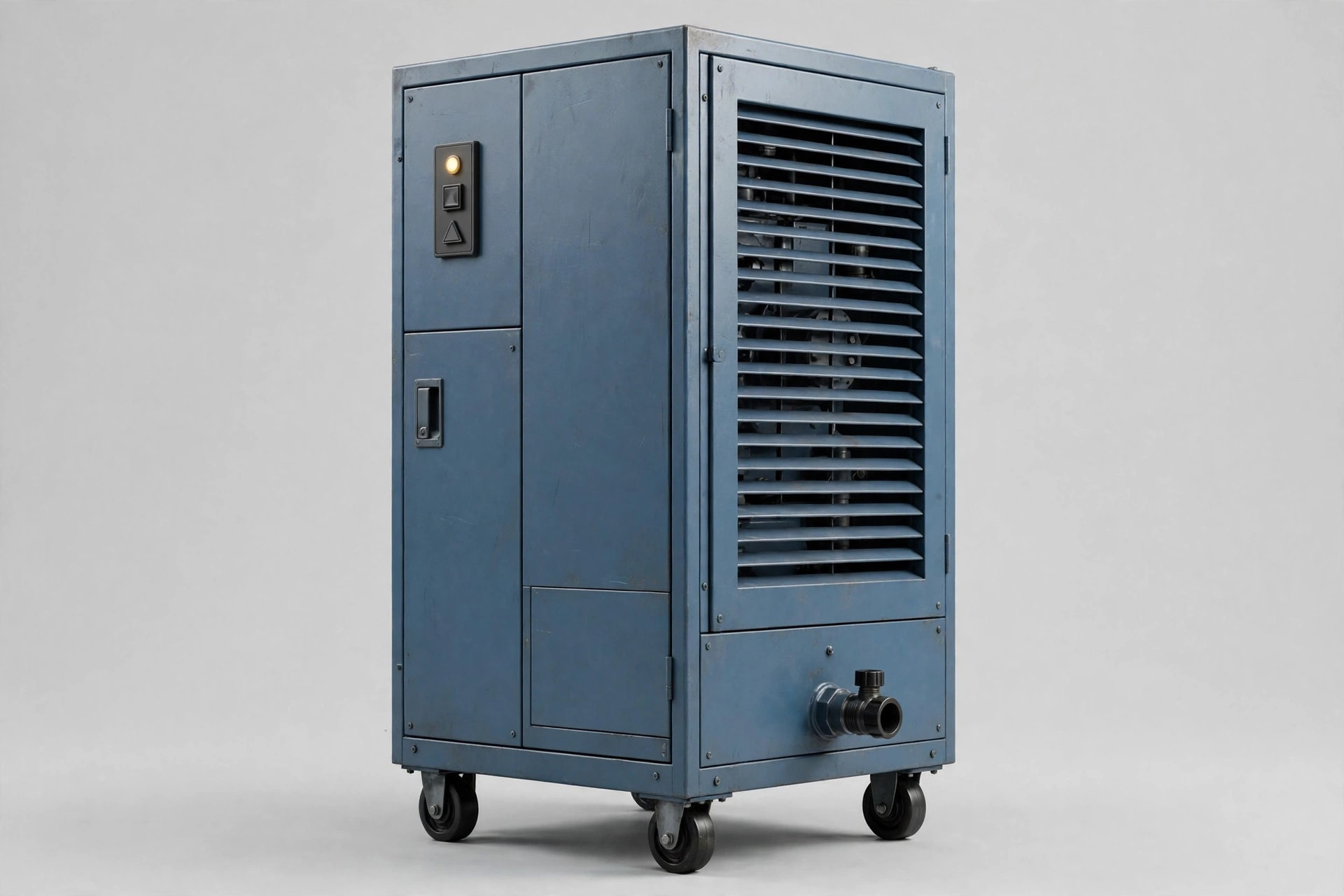
Generic illustration of an enclosed rotary screw air compressor cabinet with a vent grille
Rotary screw air compressor
The full screw comparison table: XP7.5-8G to XP45-8 across the 0.8, 1.0 and 1.3 Mpa lines.
View the page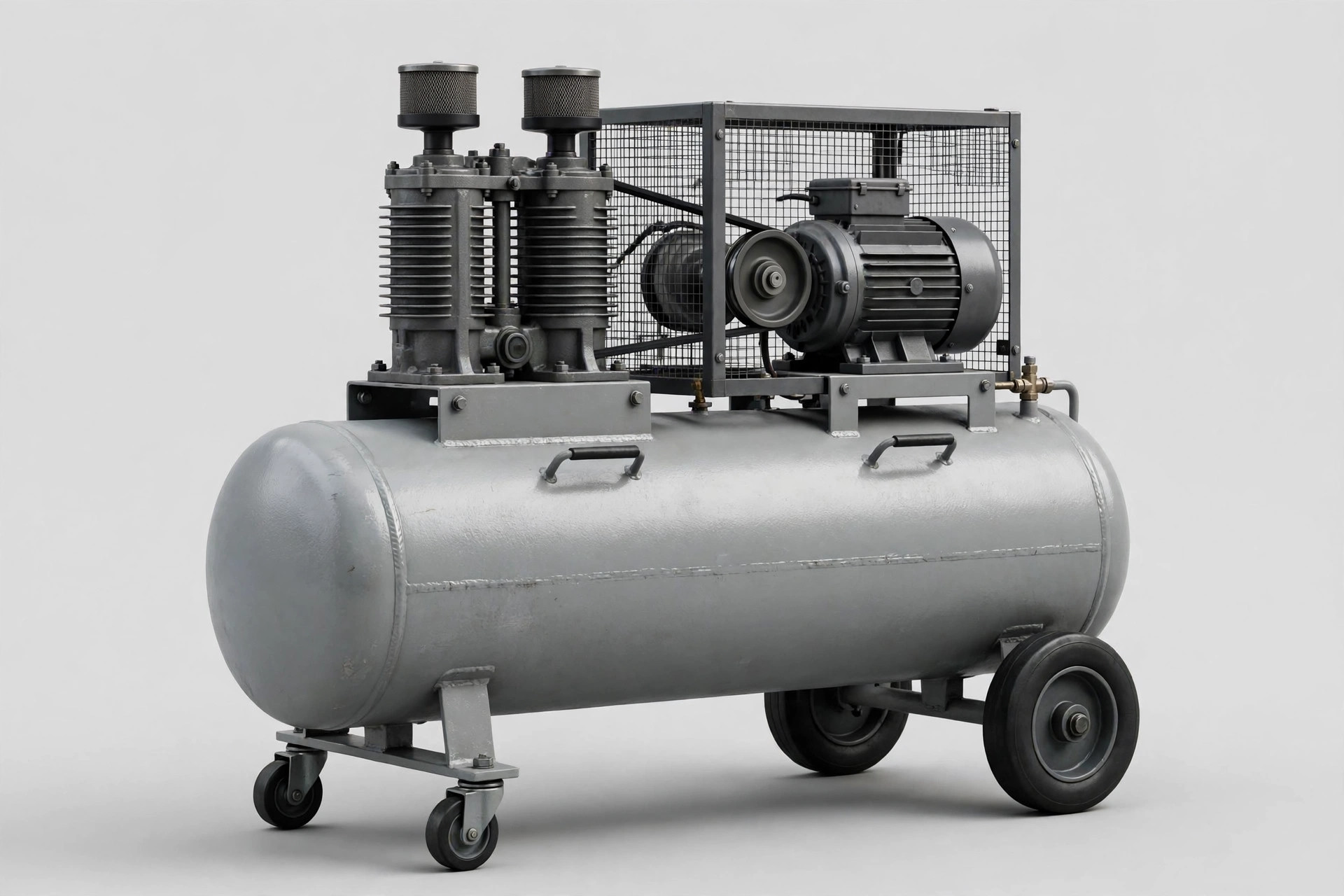
Generic illustration of a belt-driven piston air compressor on a wheeled air tank
Belt driven air compressor
The belt-driven piston range, in full: XP2070-8 to XP2.0/8, including the XP0.9/12.5 entry.
View the page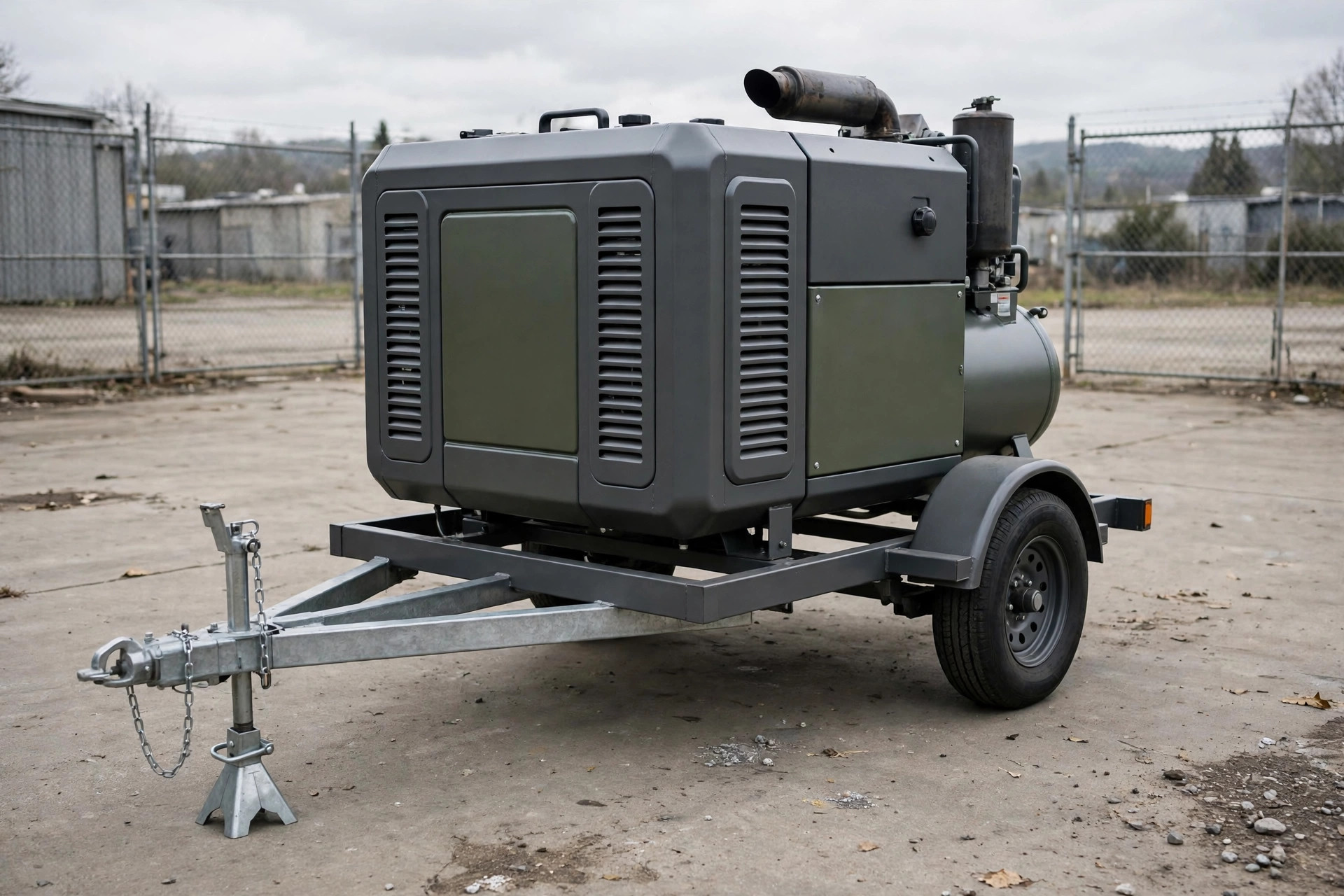
Generic illustration of a towable diesel air compressor on a trailer frame in a yard
Diesel air compressor
The diesel range, in full: XP-0.9/12.5 to XP-1.05/14 and the XP-35 to XP-220A/B portable line.
View the pageGeneric illustration of a towable diesel air compressor on a trailer frame in a yard
Portable air compressor
Choosing portable air across the diesel line and the movable belt-driven models, by site and duty.
View the pageThe compressor lines at a glance
Duty decides the line; pressure and flow decide the model. Take the full tables and lists from the detail pages.
| Item | What it is / how it is handled |
|---|---|
| Screw packages | XP7.5-8G to XP45-13: 7.5–45 kW, 1.2–7.1 m³/min at 0.8–1.3 Mpa, enclosed and direct-driven. |
| Belt-driven piston | XP2070-8 to XP2.0/8 — the piston range for intermittent tool air. |
| Diesel portable | XP-0.9/12.5 to XP-220A/B — engine-driven air for sites without a supply. |
| Drying and filtration | Ask for air treatment for paint and precision tools to be specified with the package at quote. |
| Sizing rule | Sum the simultaneous tools at their pressure; that figure, not the tank, picks the model. |
Checks before a compressor quote
- The tools and machines that draw air together at the busiest hour, with their pressures.
- Duty: continuous all-day draw or intermittent bursts — the screw/piston decision.
- Where the compressor lives: inside noise limits, heat and ventilation around it.
- Air quality needed: paint work needs drier, cleaner air than tyre inflation does.
- For diesel portables: towing, site access and the pressure your site tools demand.
Questions buyers ask about air compressors
Screw or piston for a general workshop?
Count your simultaneous air users at the busiest hour. One or two intermittent tools: piston. A bay of tools, air lifts and a booth drawing together all day: screw — and the screw page's table is where the sizing starts.
What pressure line do I need?
Most workshop tools are rated around the 0.8 Mpa line; the 1.0 and 1.3 Mpa lines serve tools and processes that genuinely need more. Buy the pressure your tools' plates call for — excess pressure is energy bought for nothing.
Can one compressor feed the whole site?
Often yes, if it is sized on the simultaneous-demand sum and the pipework is run properly. The guide works the method; the inquiry applies it to your tool list.
Send an inquiry
Work the guide on your own facts first. Take the measurements and counts the guide sets out on your own vehicles and floor; then send the results with the family you are asking about.
Request a quotation About the company