Tire mounting machine
Tire mounting machines: the XP-326 family
Mounting is the half of changing that damages rims and tyres when it goes wrong, and the XP-326 family is the catalogue's second changer line built around it: four models over wheels to 1,040 mm, clamping 10–20 inches outside and 13–24 inside.
Request a quotationBrowse the range- Wheels to 1,040 mm
- Rims 10–24 in clamping
- Right-arm variant XP-326AR
- Motor 0.75/1.1 kW
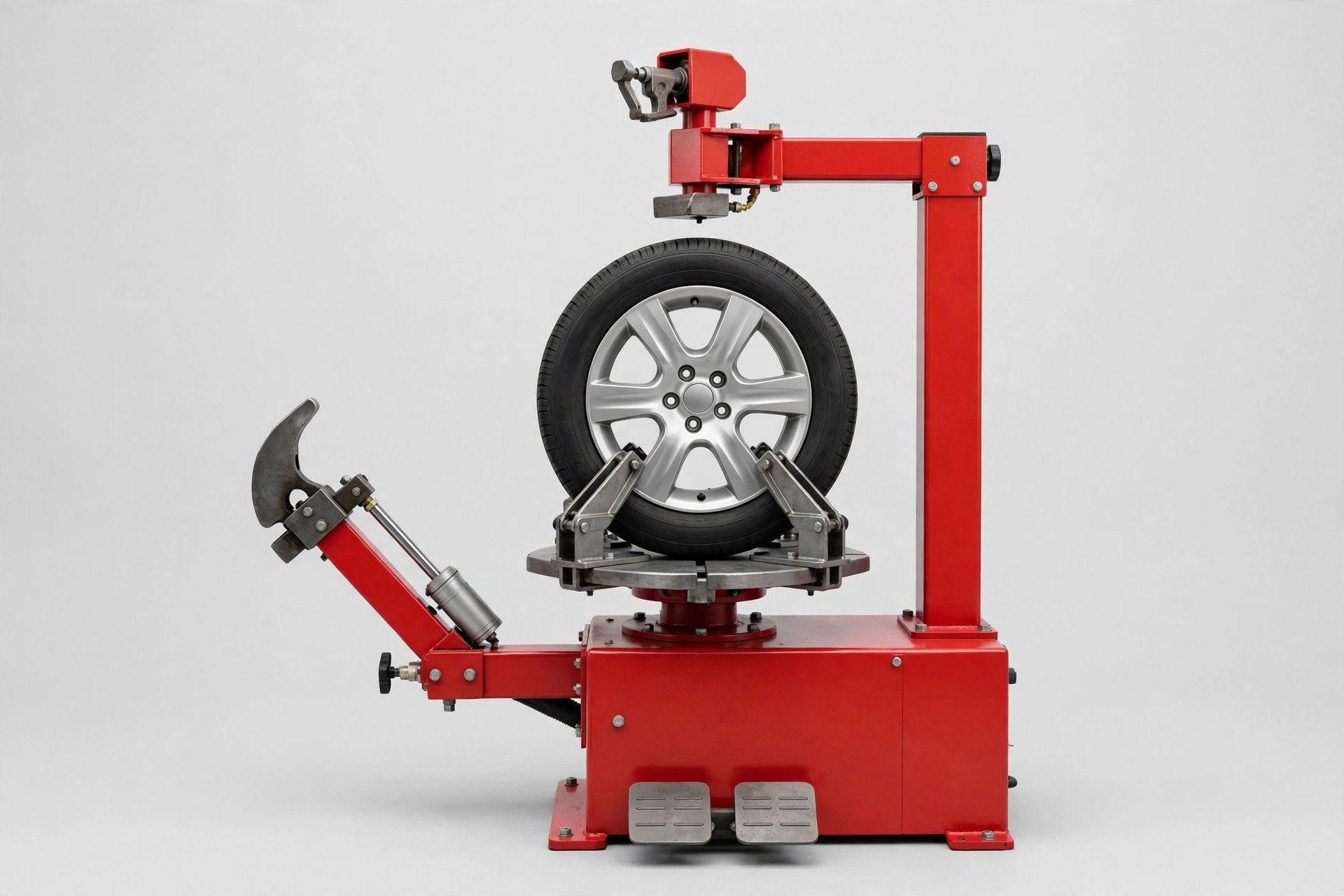
A second family, deliberately overlapping
Catalogues carry parallel changer families because workshops standardise: parts familiarity, operator habit and one service relationship. The XP-326 family's published figures sit close to the XP-316A group's — same turntable speed, same power options, same tyre-width and pressure ranges — with its own model set: the XP-326A as the reference machine, the XP-326AL, the XP-326AR with its right helper arm, and the XP-326D.
That overlap is the honest picture: on the figures, the two lines coincide. The choice between the 316 and 326 lines at the same clamping range is made on configuration detail and quotation — compare the two pages figure against figure — that is the comparison that finishes the choice.
The AR's right helper arm
The XP-326AR is the family's answer to stiff fitments: a helper arm working from the right side of the mounting head, pressing the bead into the drop centre through the mounting pass. On low-profile and run-flat work, that arm is the difference between a controlled mount and a wrestling match conducted against an alloy rim's edge. On ordinary touring tyres it stands idle — which is the correct way to think about helper arms generally: bought for the worst tyre of your week, idle for the rest, and worth it precisely on the days it works.
All four models share the family's net-weight band (200–221 kg) and packing size, so the bay plan does not change between them. The variant distinctions beyond the table and the AR's arm: ask for them per model at quote stage.
XP-326 family specification
Published parameters for the XP-326 group. Shared across the group: a 7 rpm turntable, tyres 3–14 in wide, 8–10 Bar working pressure, 110/220/380V supply options and 0.75/1.1 kW of motor; clamping 10–20 in outside, 13–24 in inside; largest wheel 1,040 mm across.
| Model | Net weight (kg) | Gross weight (kg) | Note |
|---|---|---|---|
| XP-326A | 221 | 250 | The family's reference model |
| XP-326AL | 207 | 236 | Family variant |
| XP-326AR | 205 | 234 | Right helper arm fitted |
| XP-326D | 200 | 225 | Family variant |
Checks before an XP-326 quote
- Your rim book against the family's 10–24 inch clamping envelope.
- Stiff-fitment volume — the XP-326AR question.
- Whether your workshop is standardising from the 316 line or starting fresh.
- Air supply and bay staging, shared with the balancer decision.
- Variant details for the exact model quoted, confirmed in writing.
Questions buyers ask about tire mounting machine
326 or 316 — which family?
On published figures they overlap deliberately; decide on the helper-arm configuration you need and the quotation for the exact model. Anyone who tells you one family is simply better is selling, not specifying.
Is the right helper arm enough for run-flats?
For the run-flat volume of a typical car parc, a single helper arm plus correct technique covers the work. Daily high-volume run-flat specialists should compare the B850-device models on the heavy-duty page as well.
What is the AL variant's distinction?
Beyond the table, ask for variant distinctions to be confirmed in writing at quote stage. Ask for the AL's distinguishing configuration in writing if it is the model quoted.
Send an inquiry
Compare both sides against your own work. Put your wheel sizes, vehicle weights and changeover counts side by side; ask for each side priced on its own written confirmation.
Request a quotation About the company