3D alignment
3D wheel alignment machines
This page is about the measuring method itself — cameras reading targets — and the three models that lead with it: the XP-A6, the XP-A7 and the full-automatic XP-A10. If you are deciding whether 3D is your next alignment step, start here.
Request a quotationBrowse the range- Camera + target method
- XP-A6, XP-A7, XP-A10
- No sensor-head cabling
- Spec sheet on request
What '3D' actually measures
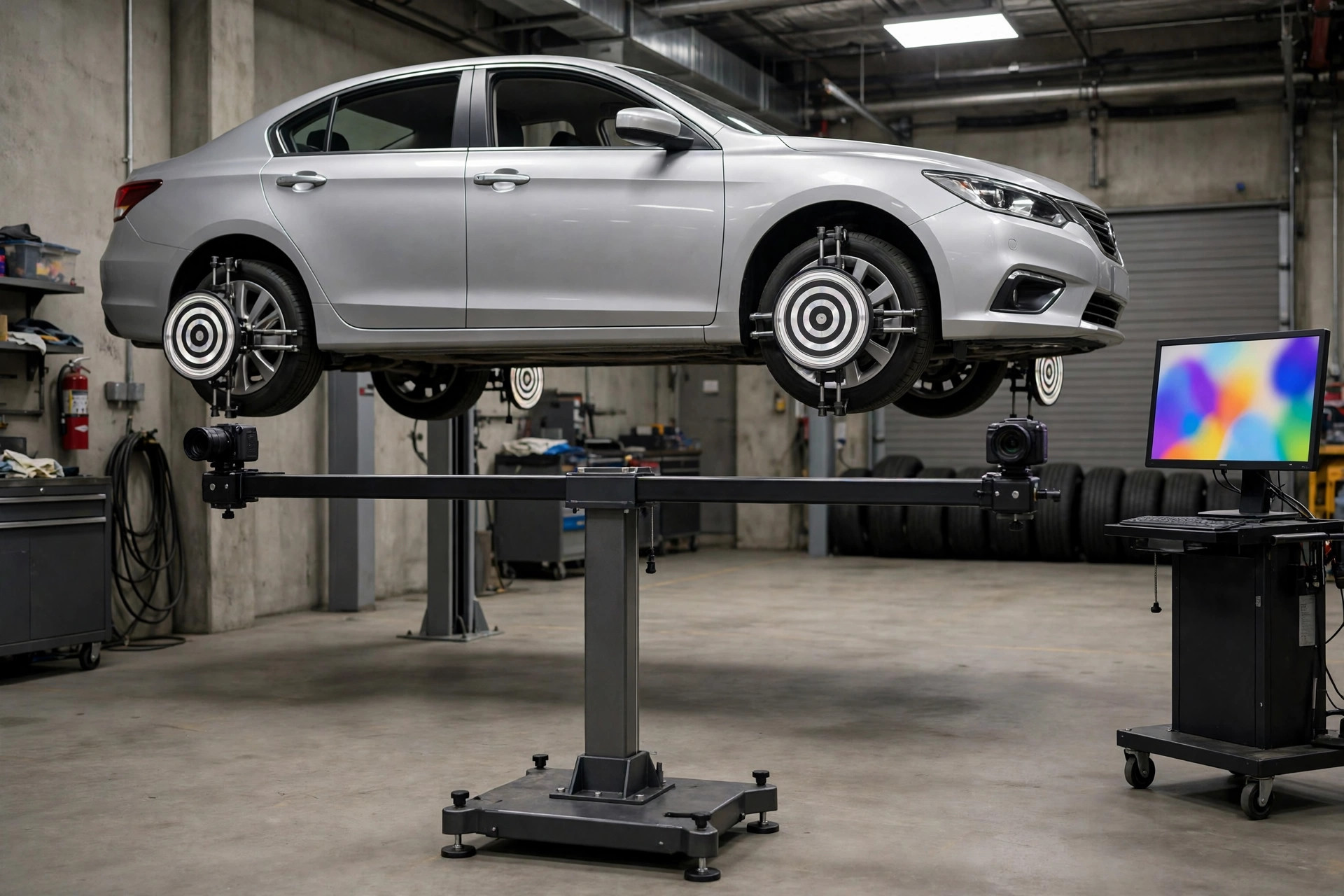
A 3D aligner does not measure angles at the wheel with sensors; it photographs targets. Each wheel carries a passive target plate on a clamp. Cameras track the targets' positions in space, and the software reconstructs the wheel planes and the car's geometry from how those images change as the car is rolled a short distance for compensation. Toe, camber and the axle relationships are computed, not read off a gauge.
The practical consequences are what workshops buy: nothing electronic lives on the wheel, so there is nothing to charge, calibrate at the head, or repair after a drop; setup is clamping four targets and rolling the car; and the measurement is indifferent to which corner you start at. The discipline moves from the equipment to the floor — the car must sit level and the cameras must see — so prepare the bay as carefully as you choose the machine.
Where the three models sit
The XP-A6 is the entry to the method: the full 3D measuring cycle in the range's most accessible configuration, for workshops replacing a sensor aligner or opening a first alignment bay. The XP-A7 steps the configuration up for bays where alignment volume is growing. The XP-A10 is the full-automatic head of the range, built to shorten the measuring cycle itself for bays that sell alignment as a fast, repeatable service.
Choosing between them is a throughput decision, not an accuracy decision: use the request block below to ask for each model's measuring performance on its own specification sheet, for the models you are comparing. A low-volume bay that buys the top configuration is parking money; a high-volume bay that buys the entry configuration is queuing customers.
Paperwork, checked the buyer's way
The paperwork discipline for this family does not change with the measuring method: Ask for the current EC type-examination certificate for your exact model, and check the holder name and expiry date before you order. Hold the software database to the same standard — version, coverage and update terms in writing — because the database is the part of a 3D aligner that ages fastest.
Also settle the lift pairing on paper at the same time: which lift, which turntables, which slip plates. A 3D aligner over the wrong lift is a measuring system waiting for its other half.
What a 3D configuration includes
A 3D aligner quotation is a bundle, and the bundle's contents are what you are comparing. Use the request block below to ask for each model's figures on its specification sheet.
| Bundle element | What to compare |
|---|---|
| Cameras and carrier | Beam or post arrangement, and the bay geometry it needs. |
| Targets and clamps | Target set and clamp coverage for your rim and tyre mix. |
| Software and database | Adjustment workflow, printouts, database version and update terms. |
| Cabinet package | Cabinet, display and printer — the operator's station. |
| Automation level | How much of the measuring cycle the machine drives itself — the XP-A10's ground. |
Getting the numbers for a 3D aligner
Request the full specification sheet for this model, including measuring range and accuracy, before you specify it. Name the models you are comparing — XP-A6, XP-A7, XP-A10 or across the car range — and ask for the sheets for the configurations quoted — the only honest basis for the comparison.
Checks before a 3D-aligner quote
- Alignment volume per week — the throughput case for each configuration level.
- Camera sight lines and bay lighting where the cameras will work.
- Floor levelness across the measuring position.
- Lift and turntable pairing, settled as one package.
- Database coverage for the vehicle parc you actually serve.
Questions buyers ask about 3d wheel alignment machine
Is 3D faster than a sensor aligner?
In setup, clearly: clamp targets and roll, instead of mounting and cabling four sensor heads and compensating each. Over a week of alignments the saved minutes are the method's payback; the measuring itself is comparably quick on both.
What wears out on a 3D aligner?
Targets and clamps take the knocks; cameras and cabinets live a sheltered life. Ask about target replacement cost and availability when you compare configurations — it is the running-cost line buyers forget.
Can 3D work over a scissor lift?
Yes, with the platform level and turntables fitted; the in-ground scissor family is the common pairing. The pairing is a configuration question to settle in the inquiry, with the lift model named.
Send an inquiry
Ask for the unit matched to your work. Send the model code you are considering and the work it will do each week; ask for that model's specification sheet in return.
Request a quotation About the company