Guide
Wheel alignment equipment: a selection guide
Aligners are the one family in this catalogue sold by configuration — so this guide teaches the selection method the configuration demands: configuration, bay geometry, lift pairing and software, closed by a spec-sheet comparison.
Request a quotationBrowse the range- Configuration-first method
- Bay geometry checks
- Car and truck split
- Spec-sheet comparison
Start here
Shortlist every other family from its tables. For alignment, work from the configuration — camera arrangement, clamps, cabinet, software — and ask for measuring figures per configuration on the model's specification sheet. Buyers who find that frustrating usually end up buying on adjectives. This guide is the alternative: a method that produces a defensible choice from facts you can verify.
The method has four steps: fix the vehicle scope, fix the bay, fix the lift pairing, and then compare the surviving configurations on their specification sheets, like for like.
Step one: vehicle scope
Cars only, trucks only, or both — stated honestly, with the extremes named: the longest wheelbase, the largest wheels, the lowest cars. The car range (XP-A6 to XP-A10) and the truck range (XP-A11 to XP-A14) divide exactly there, and the occasional-truck question is answered by clamp range and measuring distance on the sheet, not by hope. A workshop that aligns a truck a month can often schedule it onto a car bay's configuration if the sheet supports it; a workshop that aligns trucks weekly needs the truck range and should not apologise for it.
Write the scope down before any quotation. It is the document that prevents the most expensive alignment mistake: a machine whose envelope your longest vehicle quietly exceeds.
Step two: the bay
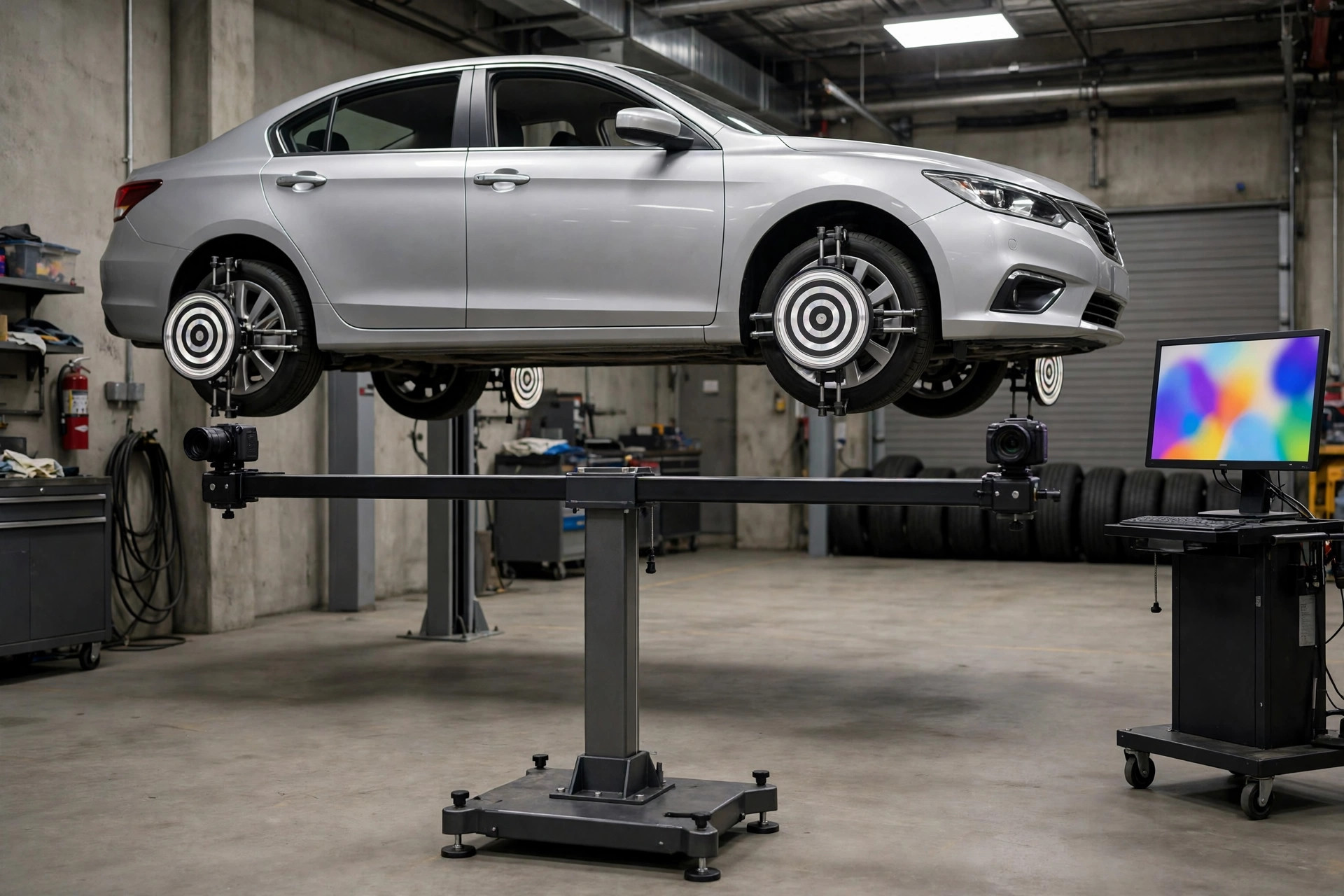
Cameras must see targets. That single fact generates the bay checks: an unobstructed line from the camera position to all four wheel positions, bay length for the longest vehicle plus the camera standoff, lighting that does not blind the cameras at the door line, and a floor level enough that the car sits as it drives. None of these is expensive to verify with a tape and a site visit from your own eyes; all of them are expensive to discover after installation.
Drive-through quick-check work and fixed-bay full alignment are different bay commitments. Decide which service you are selling, because the configuration follows the service, not the other way round.
Step three: the lift pairing
The vehicle must sit level on turntables while it is measured, so the aligner and its lift are one purchase. In this catalogue the pairings are the four-post alignment lift XP-4-5019A and the in-ground scissor family; an existing lift can serve if it holds level and takes turntables, which is a verification, not an assumption. Quote the pairing as one package — aligner configuration, turntables, slip plates, rolling jack — so nothing arrives almost compatible.
Trucks usually align on a level floor area or over a pit instead; the pairing question there is the standing area's levelness over the full wheelbase.
Step four: compare sheets, not adjectives
With scope, bay and lift fixed, request the specification sheet for each surviving model — the route is the same for every aligner: Request the full specification sheet for this model, including measuring range and accuracy, before you specify it. Compare the sheets line by line: measuring range against your scope, accuracy as stated, clamp coverage against your rim book, database version and update terms, cabinet and printer package.
And apply the paperwork check: Ask for the current EC type-examination certificate for your exact model, and check the holder name and expiry date before you order. Configuration, sheet, documents — an aligner bought that way stays bought.
The aligner selection method
| Item | What it is / how it is handled |
|---|---|
| Scope | Vehicle mix and extremes named in writing before quotations. |
| Bay | Camera sight lines, standoff length, lighting, floor levelness verified. |
| Pairing | Lift, turntables, slip plates and jack quoted as one package. |
| Sheets | Specification sheets compared line by line for the exact configurations. |
| Paperwork | Document holder and expiry checked for the exact model. |
Questions buyers ask about wheel alignment equipment guide
How do I get the numbers for an aligner?
The numbers attach to configurations. Ask for them per configuration, on the model's specification sheet — never against a bare model name. Ask for the figures for your exact configuration — the configuration you would actually receive.
Is 3D always the right choice?
For a workshop buying alignment capacity now, the 3D camera method's setup speed and target-only wheel hardware make it the mainstream choice — the 3D page in this catalogue argues the method in full. Volume is the qualifier: very occasional alignment can be served by simpler arrangements or outsourced.
Can I add an aligner to my existing four-post lift?
Often, if the lift holds level and accepts turntables. Name the lift and its platform dimensions in the inquiry and ask for the pairing to be verified rather than assumed.
Send an inquiry
Work the guide on your own facts first. Take the measurements and counts the guide sets out on your own vehicles and floor; then send the results with the family you are asking about.
Request a quotation About the company