XP-612 / XP-613
XP-612 and XP-613 paint booths
The XP-612 and XP-613 are the range's panel booths: the same 6,900 × 3,900 × 2,600 mm cabin, twin 3 kW intake fans moving 20,000 m³/h, and 9 kW total power — the 613 adding a dedicated 5.5 kW exhaust fan to the arrangement.
Request a quotationBrowse the range- Cabin 6,900 × 3,900 mm
- Intake 20,000 m³/h
- LED lights 32 × 16 W
- Total power 9 kW
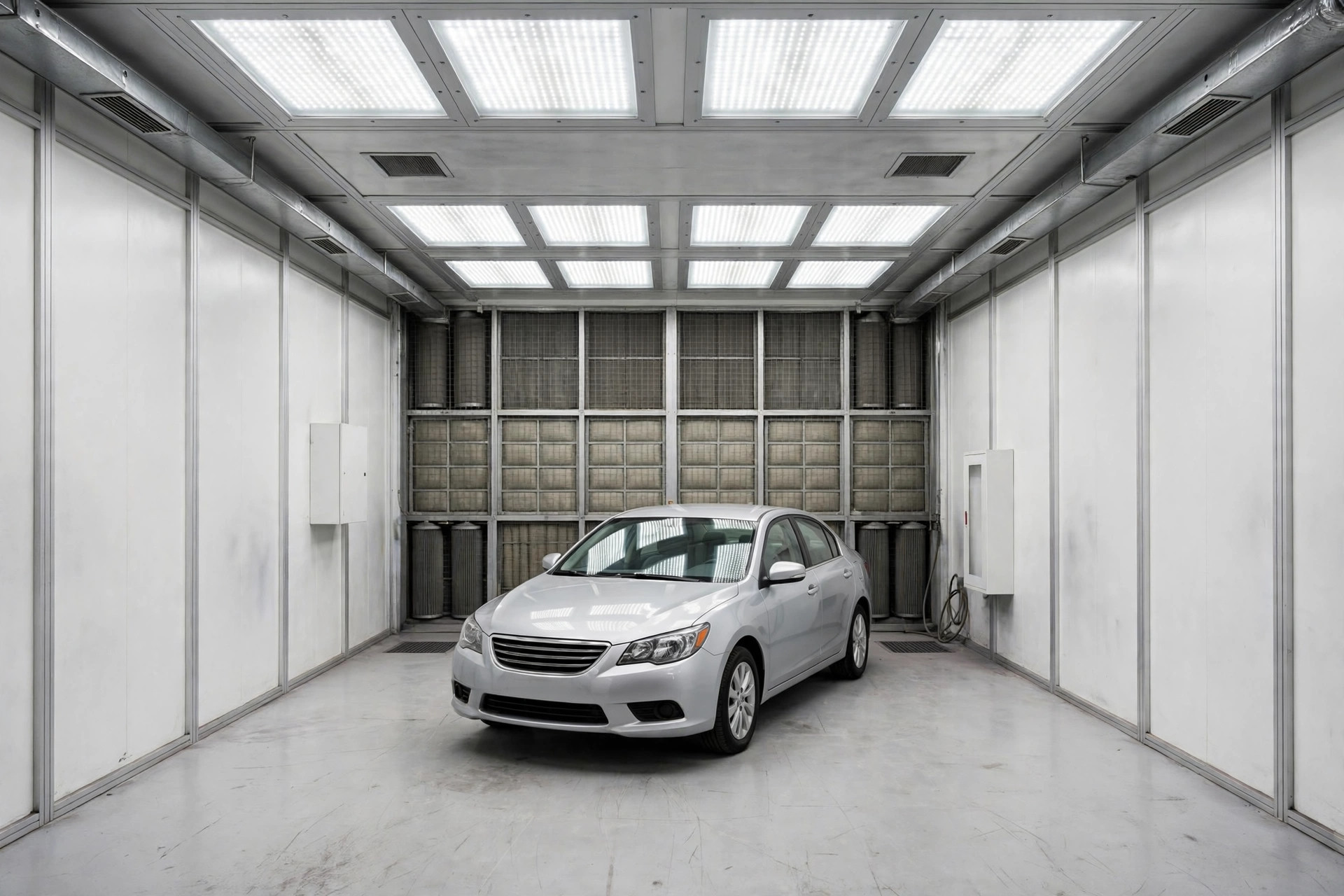
One cabin, two air arrangements
Both booths work the same internal cabin — 6,900 mm long, 3,900 wide, 2,600 high — inside the same 7,000 × 5,200 × 3,300 mm outside envelope, with a 650 × 2,000 mm personnel door fitted with a handle and anti-explosion lock. The XP-612 lights the cabin with 32 LED ceiling lights at 16 W and draws its air through two 3 kW double-intake centrifugal fans at 20,000 m³/h total intake capacity.
The XP-613 keeps that intake arrangement and adds the exhaust side as a specified fan: a 5.5 kW unit at 12,500 m³/h, against the 612's arrangement. Total power is 9 kW on both, three-phase 380V/220V at 50/60Hz. The choice between them is an air-balance choice for your paint process and your building's duct run — longer or more resistant extraction routes argue for the specified exhaust of the 613.
What the fan figures mean for finish
A booth's finish quality is airflow behaviour made visible: fresh filtered air in at a controlled rate, overspray carried away from the work rather than across it, and no dead corners where dust settles back onto wet paint. The published intake figure — 20,000 m³/h — is the number to set against your cabin volume and your painter's working pattern: judge fans before trim.
Ask for the heating and bake arrangement to be specified per order against your paint system and climate; ask for the heating configuration in writing in the inquiry, alongside the duct route you intend, and ask for the quotation to describe the booth that will actually be built.
XP-612 and XP-613 specification
The parameters below. Both models: inside 6,900 × 3,900 × 2,600 mm; outside 7,000 × 5,200 × 3,300 mm; personnel door 650 × 2,000 mm with handle and anti-explosion lock; inlet fans 2 × 3 kW, total intake capacity 20,000 m³/h; total power 9 kW (380V/220V, 50/60Hz, three-phase).
| Parameter | XP-612 | XP-613 |
|---|---|---|
| Exhaust fan | Not separately specified | 1 × 5.5 kW, 12,500 m³/h |
| Lighting | LED ceiling lights, 32 × 16 W | As per order configuration |
Ask for the XP-613's lighting detail in writing with your quotation. Ask for the heating arrangement for your model to be specified per order.
Checks before a panel-booth quote
- Building envelope against the 7,000 × 5,200 × 3,300 mm outside dimensions, plus the duct route.
- Extraction route length and resistance — the XP-613 question.
- Three-phase supply capacity against the 9 kW total, plus heating as specified.
- Your paint system's airflow expectations, set against the 20,000 m³/h intake.
- Local emissions and fire-protection rules for spray work in your area.
Questions buyers ask about paint booth
612 or 613?
If your extraction route is short and simple, the 612's arrangement serves; if the duct run is long, lifted or filtered hard, the 613's specified exhaust fan is the controlled answer. Describe the route in the inquiry, and ask for the recommendation to be made against it.
Can these booths bake?
State whether your process needs bake cycles and at what duty, and ask for the heating arrangement for your model to be specified per order, matched to your paint system, as part of the booth.
What filtration is fitted?
Intake and exhaust filtration media are part of the booth's configuration and are consumables to plan around; ask for the filter specification and replacement route for the exact build in your inquiry.
Send an inquiry
Ask for the unit matched to your work. Send the model code you are considering and the work it will do each week; ask for that model's specification sheet in return.
Request a quotation About the company