Truck alignment
Truck wheel alignment machines
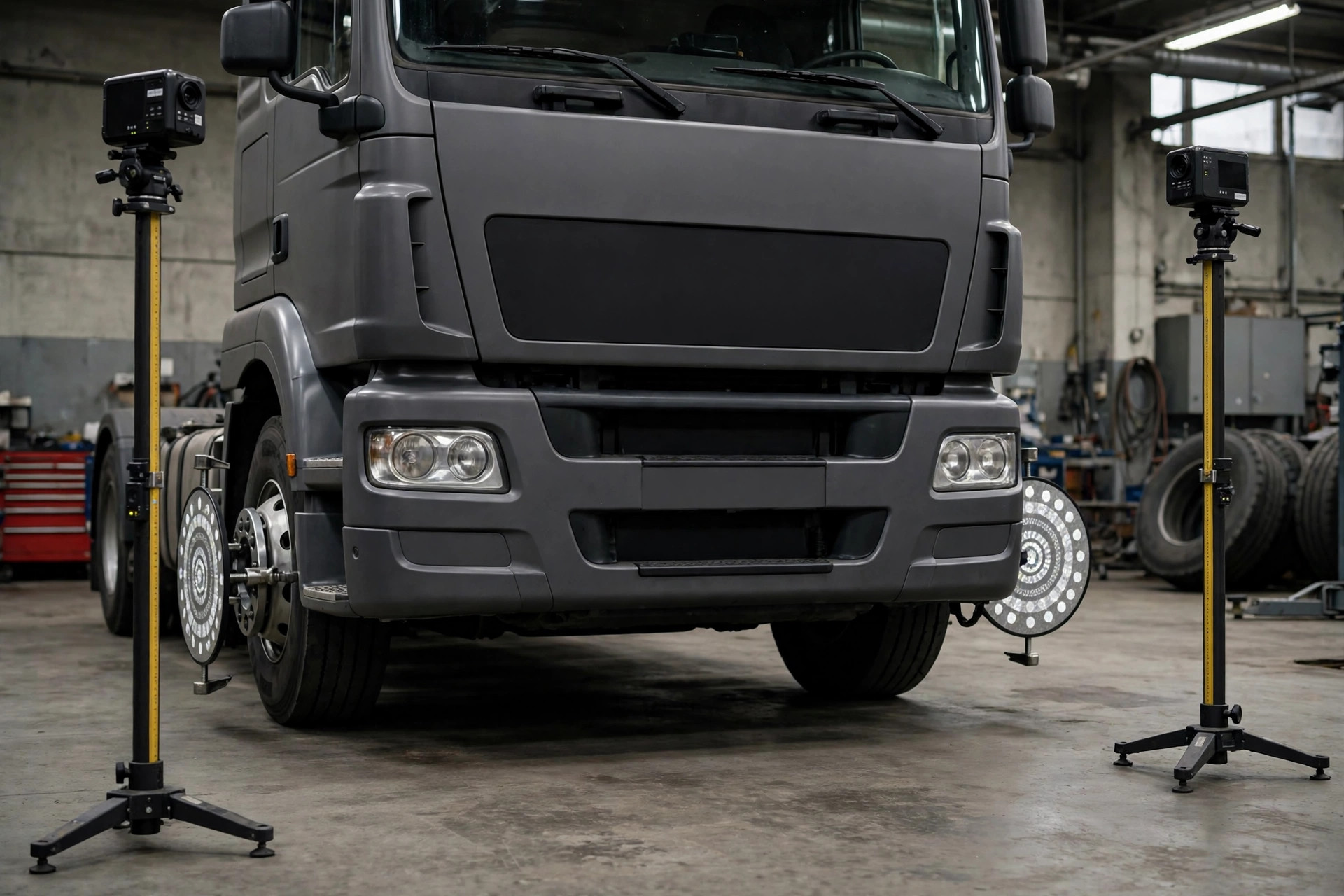
Four models — XP-A11, XP-A12, XP-A13 and XP-A14 — take the 3D camera method to truck scale: longer measuring distances, targets and clamps for truck wheels, and software routines that treat a multi-axle vehicle as one geometry problem.
Request a quotationBrowse the range- Models XP-A11–XP-A14
- Long-wheelbase measurement
- Truck wheel clamps
- Spec sheet on request
What changes when the vehicle is a truck
Wheelbase is the obvious change, but not the only one. Truck wheels are larger and their tyres stand taller, so clamps and targets scale up. A truck rarely has one rear axle, so the software has to handle tandem arrangements and keep the thrust line honest across all of them. And the vehicle arrives with a fifth wheel, a load or a trailer in the way of the ideal bay layout, so the measuring arrangement has to tolerate real fleet conditions rather than a showroom setup.
The four models in this range divide that work by configuration: camera arrangement and measuring distance, the clamp set supplied, and the software scope for multi-axle routines. As with the car range, the figures that matter belong to a configuration, and they are compared on specification sheets — the request block below is the route to them.
Alignment as a tyre-saving service
Fleet operators buy truck alignment for one reason: tyres. A multi-axle truck scrubbing its steer or drive tyres out of line burns money at a rate a workshop can calculate from the fleet's own tyre invoices, which is why truck alignment sells as a cost argument rather than a precision argument. The aligner's job in that sale is repeatability — the same vehicle, measured the same way, before and after adjustment, with a printout the fleet manager can file.
That is also why the bay matters as much as the machine: a level standing area long enough for the longest combination you serve, and room for the technician to work the adjusters while the cameras watch. Bring your bay dimensions and your longest vehicle to the inquiry and the configuration conversation starts from facts.
Paperwork, checked the buyer's way
Truck equipment crosses borders and tenders more often than car equipment, and documentation discipline is part of the purchase: Ask for the current EC type-examination certificate for your exact model, and check the holder name and expiry date before you order. The same discipline applies to the software database — which vehicle coverage ships, and how it is kept current — because a truck database that ages is a machine that slowly stops answering the fleet's questions.
None of this is a reason to delay a purchase; it is the checklist that makes the purchase hold up when a fleet customer or an inspector asks the paperwork questions later.
How the truck aligner range is configured
Configuration decides a truck aligner more than any single figure. Ask for these points to be fixed in your quotation; ask for the figures themselves on each model's specification sheet.
| Configuration point | What it decides |
|---|---|
| Measuring arrangement | The camera setup and the wheelbase range your longest vehicle must fit inside. |
| Truck clamps and targets | The clamp set sized for truck rims and the targets the cameras read at truck distances. |
| Multi-axle software | Routines for tandem axles and thrust-line work across the whole vehicle. |
| Cabinet and printout | The operator position and the before/after printout a fleet customer files. |
| Standing area | Level floor length and width the vehicle occupies during measurement. |
Getting the numbers for a truck aligner
Request the full specification sheet for this model, including measuring range and accuracy, before you specify it. Send your longest wheelbase, your axle configurations and the bay the machine will work in, and ask for the sheet for the configuration quoted — the only numbers worth signing against.
Fleet checks before a truck-aligner quote
- The longest wheelbase and the widest vehicle you will measure, from the fleet list.
- Axle configurations in your work: rigid, tandem, and whether trailers are measured.
- Standing area levelness over the full vehicle length.
- Clamp coverage for your rim sizes, including any small-wheeled yard tractors.
- Printout and record requirements your fleet customers ask for.
Questions buyers ask about truck wheel alignment
Can a truck aligner also do vans and cars?
The measuring idea is the same, and lighter vehicles can be measured if the clamp set covers their rims; the practical limit is bay time — a truck bay cycling cars is an expensive car aligner. Mixed workshops usually quote both ranges and let the volumes decide.
Do I need a pit or a lift for truck alignment?
Truck alignment is commonly done on a level floor area or over a pit; what is not optional is levelness and length. Describe your area in the inquiry and ask for the configuration matched to it.
How does alignment pay back for a fleet?
In tyre life and fuel: scrubbing axles wear tyres unevenly and drag. The before/after printout is the document that sells the service to the fleet manager, which is why it is a configuration point, not an accessory.
Send an inquiry
Ask for the unit matched to your work. Send the model code you are considering and the work it will do each week; ask for that model's specification sheet in return.
Request a quotation About the company