Belt-driven piston
Belt driven air compressors
The belt-driven line is the piston range for intermittent workshop air. Fourteen code-designated models run from XP2070-8 to XP2.0/8. Among them is XP0.9/12.5 — quote it from this page, and check the hyphen every time: the diesel XP-0.9/12.5 is another machine.
Request a quotationBrowse the range- 14 models listed
- Piston, belt-driven
- Code-designated list
- Intermittent duty
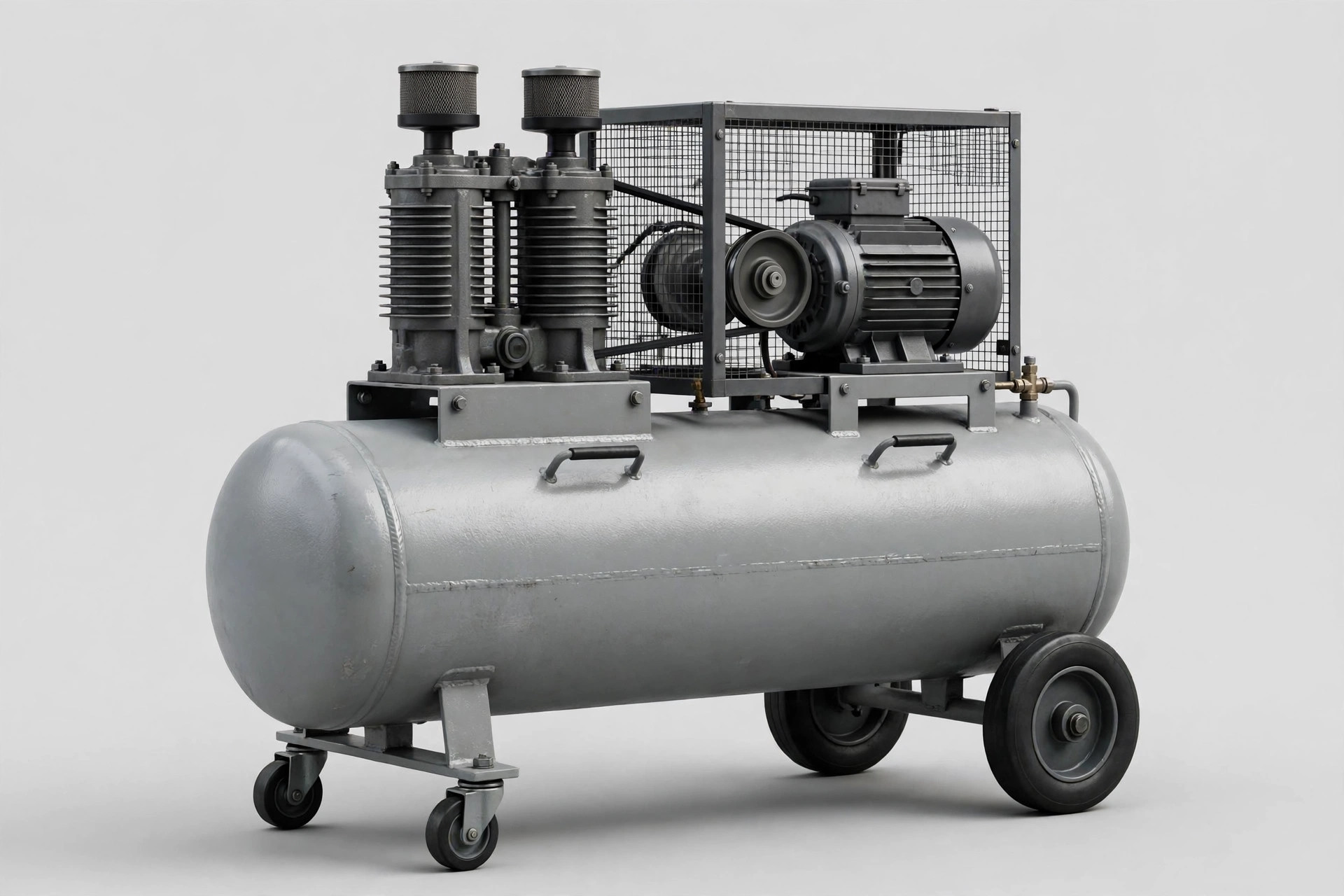
The piston bargain
A piston compressor is honest machinery: a motor, a belt, a pump and a tank. It makes air in bursts, rests while the tank feeds the tools, and asks for simple maintenance in return. Its limits are equally plain — duty cycle and noise — and they are why continuous-draw workshops graduate to screw machines. For the great middle of workshop air demand, a belt-driven piston sized with headroom is the rational purchase, and this range is where that purchase lives.
Work through this range by selection method: match the per-model sheet to your duty cycle and your tools' working pressure. For individual models' tank, motor and dimension figures, ask per model at quote stage — for the exact model's sheet when the shortlist narrows.
The model codes — and one careful distinction
Read every model code exactly as written, and do not read figures off a code: ask for the parameter sheet for the exact code, in writing, and specify from the sheet.
Keep the pair apart by drive type: XP0.9/12.5 (no hyphen after XP) is the belt-driven piston model on this page; XP-0.9/12.5 (with the hyphen), on the diesel page, is a diesel portable model. They are not the same machine, and an order should name the drive type as carefully as the code.
Belt-driven range: the published model list
The manufacturer's belt-driven list, complete. Ask for the parameter sheet for your exact code with your inquiry.
| Model | Range position |
|---|---|
| XP2070-8 | Listed model |
| XP2095-8 | Listed model |
| XP3095-8 | Listed model |
| XP0.25/8 | Code-designated model |
| XP0.36/8 | Code-designated model |
| XP0.6/8 | Code-designated model |
| XP0.8/8 | Code-designated model |
| XP0.8/12.5 | Code-designated model |
| XP0.9/8 | Code-designated model |
| XP0.9/12.5 | Code-designated model — belt-driven entry (see the distinction above) |
| XP1.0/14 | Code-designated model |
| XP1.05/14 | Code-designated model |
| XP1.6/8 | Code-designated model |
| XP2.0/8 | Largest code in the list |
Checks before a belt-driven quote
- Your burst pattern: longest continuous draw, and the tank recovery it allows.
- The working pressure your tools need, in bar.
- Where the machine's noise will live, and who works beside it.
- Drive type named exactly: the belt-driven entry is a different machine from the hyphenated diesel entry, and the two are never interchangeable.
- The shortlisted model's own parameter sheet, requested before ordering.
Questions buyers ask about belt driven air compressor
Piston or screw, one more time?
If your air draw has a shape — bursts and rests — piston economics win. If it is a plateau from opening to closing, the screw page is yours. The compressor guide works the arithmetic with real tool figures.
How do I specify a model from this range?
Ask for the per-model sheet for your exact code at quote stage, and specify from the sheet rather than from the code.
Which pressure suits tyre work?
Pressure is a tool requirement, not a code reading: ordinary tyre and tool air runs at standard shop pressure, and higher-pressure models serve tools and processes that call for more. Ask for the sheet for the code you are considering and match its stated pressure to the named need.
Send an inquiry
Work the guide on your own facts first. Take the measurements and counts the guide sets out on your own vehicles and floor; then send the results with the family you are asking about.
Request a quotation About the company